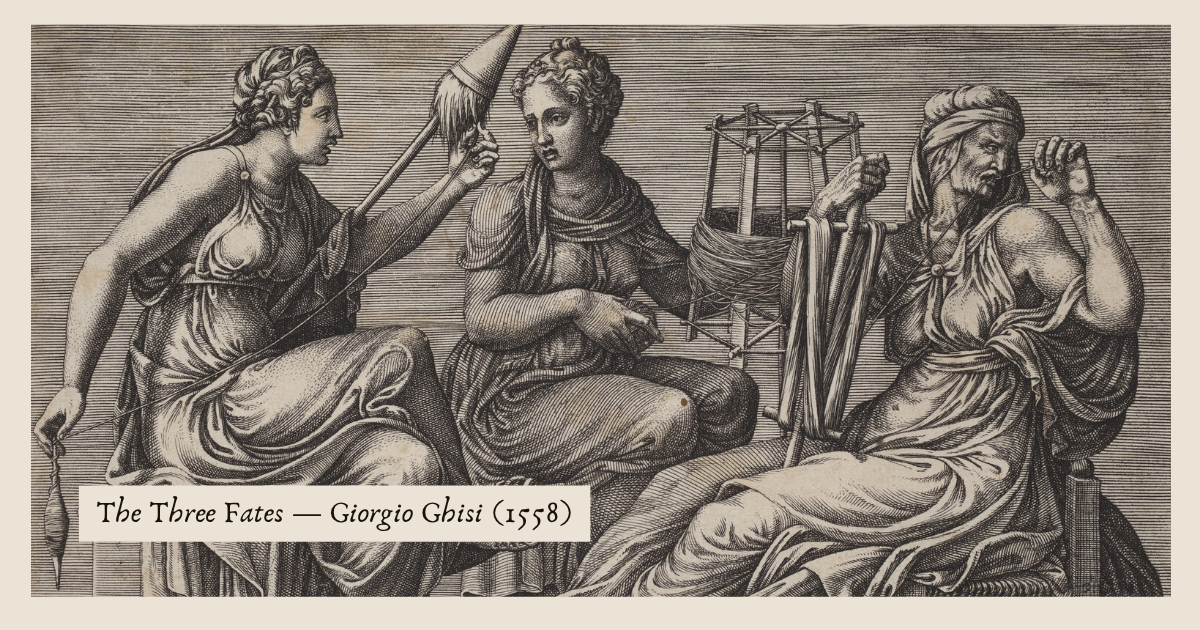
Thread, knots, spinning, weaving, and cloth have carried symbolic and magical meaning across cultures for centuries. There is something inherently magical with the process of physically transforming materials into a new object. It’s also very human of us to tell stories about the everyday work we do, searching for meaning in the (at times) mundane.
While knitting, crochet, weaving, and other hand-produced fiber arts are most commonly thought of as hobbies or merely “domestic” crafts these days, their origins were deeply rooted in purpose. In The Fabric of Civilization, author Virginia Postrel argues that human civilization has evolved largely due to our connection with fabric and making—and humanity’s need for textiles has driven technology, business, politics, and culture. To be human is to be a part of a tapestry of folklore and human history.
Modern folklore associating witches and knitting is deep within the fiber arts communities. My husband and RAVEL co-author, Michael, designed my favorite piece of witchy knitting art a few years back:
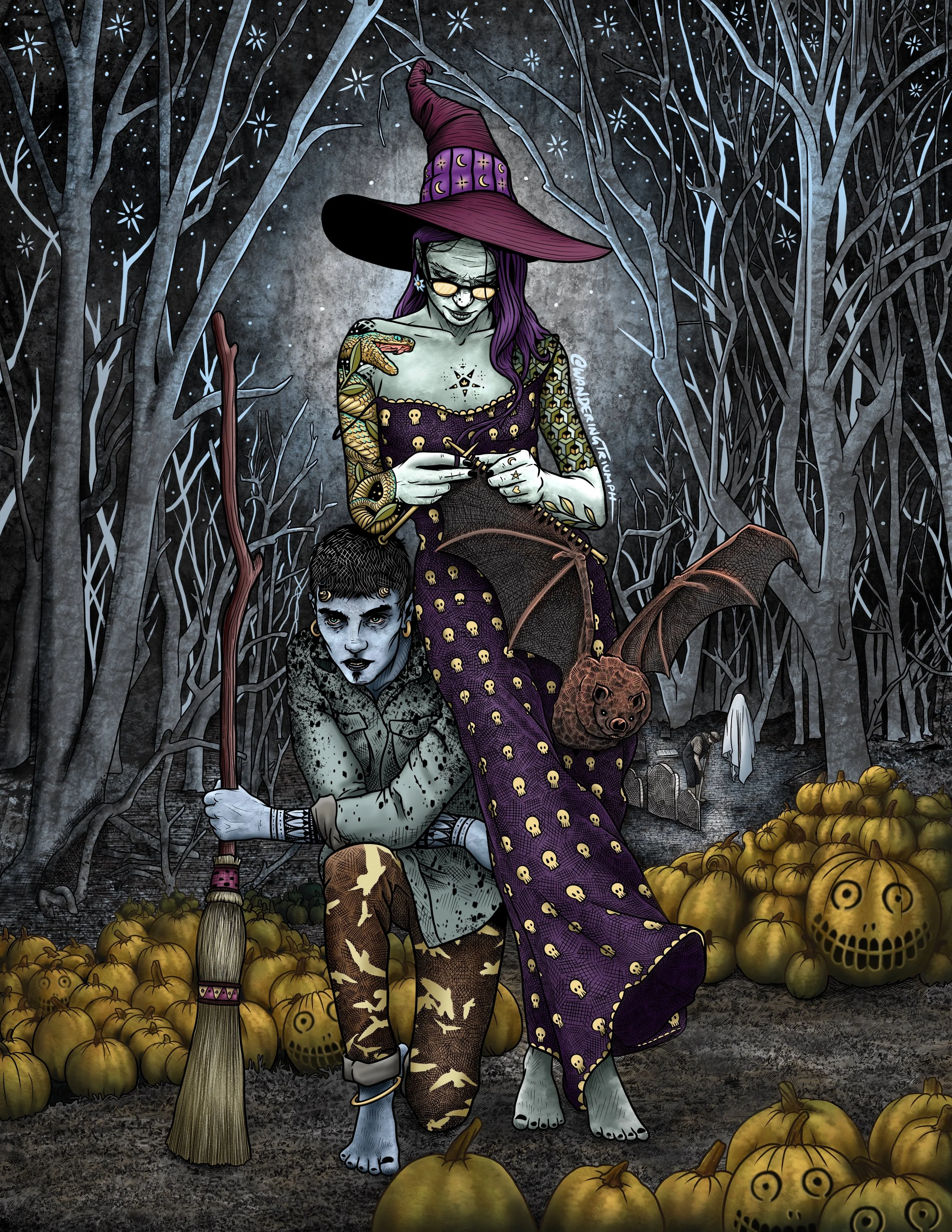
Knots That Bind by Michael Tappan
But if you look back through history and folklore, fiber as a metaphor and literal mechanism for magic is everywhere. It appears in stories about fate, protection, binding, transformation, memory, magic, and death.
While developing RAVEL, my fantasy novel built around yarn and knitting magic, I started digging into the folklore surrounding the crafts I already loved. I’ve spent the last eight years learning the craft of knitting, and I’ve dabbled in plenty of other fiber for as long as I can remember, but I’d never really explored the mythology behind any of it.
Of course, I knew some stories. About the Fates. About Sleeping Beauty and her spindle. But beyond that, I hadn’t given much thought to just how deeply fiber and magic have been intertwined throughout human history.
One thing my husband felt passionately about when we first started building a fiber-based magic system for RAVEL was that the magic needed to have logic. We dug into tabletop role-playing game systems (aka: Michael rattled off every magic system he could think of), then layered those ideas with what I knew about knitting, fiber, folklore, and the things I was uncovering through research.
And the more I read, the more I realized that humans have been connecting fiber and magic for a very, very long time.
Once you notice it, it is literally everywhere. We’ve been shaping fiber for thousands of years—and, in many ways, fiber has shaped us right back.
Just think about the language we still use: “threads of fate,” “the ties that bind,” “spinning a story,” “weaving a narrative,” “losing the thread,” and “tying up loose ends.” Fiber and making-based language is baked into the way we talk about stories, relationships, fate, and our own lives.
This has been one of my favorite research rabbit holes I’ve ever fallen into.
Before we Dive in, a Brief Note on Folklore & Sources…
Folklore is wonderfully complex, and many of these traditions have evolved across cultures, generations, and regions. I've done my best to research and summarize them accurately, but in simplifying such rich histories, I may have missed important nuances or gotten something wrong. And for that, I apologize in advance! I've included references throughout this post in hopes of inspiring further exploration. If you notice an error or have additional context to share, please leave a comment! I'm always happy to learn more and keep the conversation going.
So, here are some of the stories, traditions, myths, and pieces of folklore that stood out to me—and that inspired me while I was making my way into the depths of all things fiber, magic, and mythology. They are quite literally thousands more, so I invite you to share more with me in the comments on this post.
Knots as Binding Magic
A knot is one of the simplest things you can make with string—and one of the oldest symbols of binding. Knots have been connected with promises, protection, restriction, oaths, marriage, charms, and ritual practices across different cultures and traditions.
One of my favorite stories of knots and magic involves sailors literally buying the wind.
European maritime folklore includes stories about sailors acquiring ropes or cords tied with three knots. Untying the first was said to release a favorable wind, the second a stronger wind, and the third a dangerous storm.
Sailors purchasing a knotted wind-cord, from Olaus Magnus’s Historia de Gentibus Septentrionalibus (1555) is shown below.
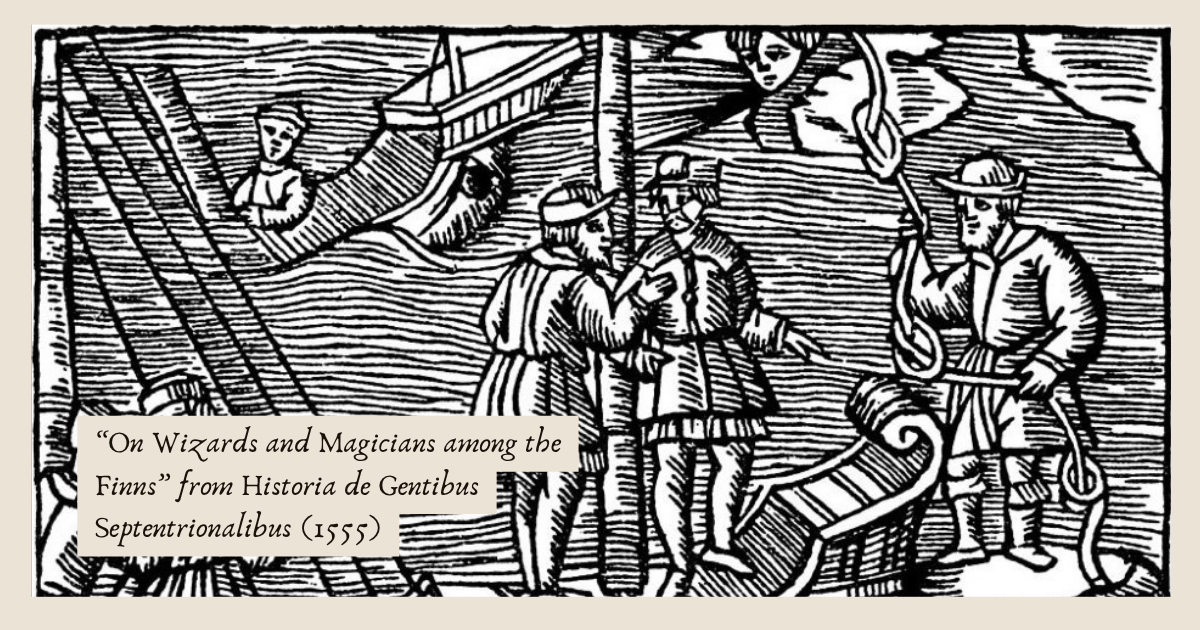
I love this one because the magic is not just represented by the knot. The knot is imagined as physically holding the magic inside it.
Knots also carried powerful symbolic and magical meaning in ancient Egypt. One of the best-known examples is the tyet, sometimes called the “Knot of Isis,” an amulet associated with the goddess Isis and used as a symbol of protection, life, and regeneration. Knotted cords and amulets could be worn or placed with the dead as protective objects, reflecting a broader belief that binding, tying, and fastening could hold spiritual power. A knot was a way of securing protection, preserving life, or binding magical intention into a physical object or talisman.
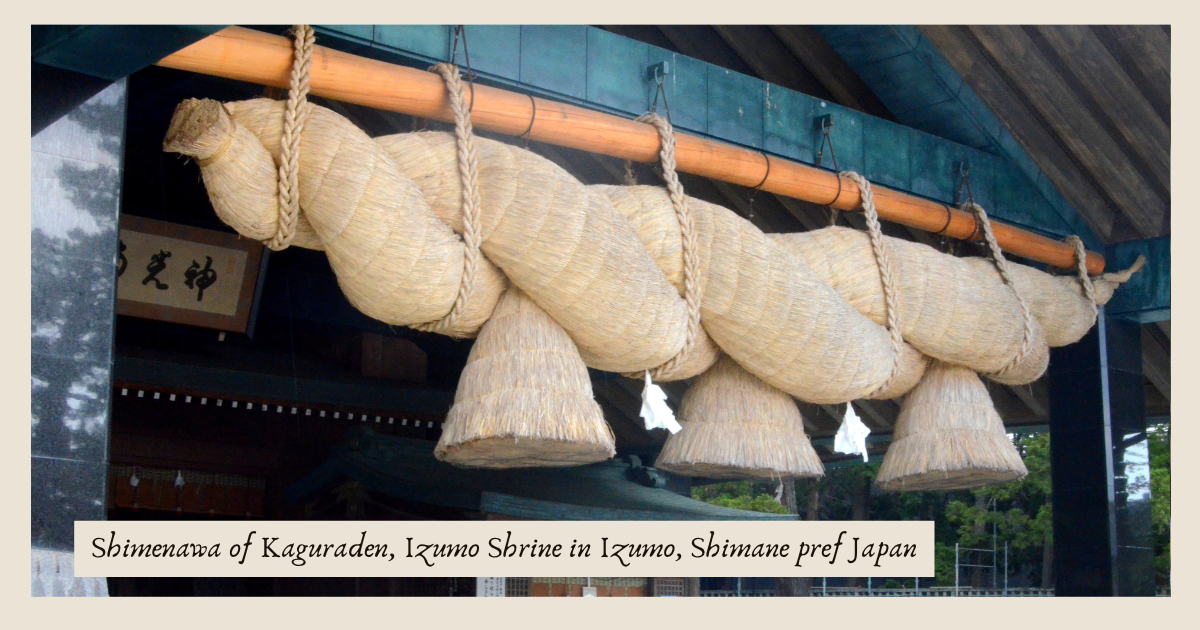
In Shinto traditions, shimenawa are sacred ropes marking spiritually significant spaces or objects. The broader Japanese concept of musubi connects tying and binding with creation and spiritual relationships. An example below is the Shimenawa of Kaguraden, Izumo Shrine in Izumo, Shimane pref Japan (photo credit: Krorokeroro)
During the Dragon Boat Festival in China, children traditionally wear five-colored silk threads tied around their wrists or ankles to ward off evil, illness, and misfortune. Some regional traditions hold that the threads should only be removed after the first summer rainfall and cast into a river.
Recommended Reading
The Golden Thread: How Fabric Changed History by Kassia St. Clair
Quipus and Witches' Knots: The Role of the Knot in Primitive and Ancient Cultures by Cyrus Lawrence Day
Women's Work: The First 20,000 Years by Elizabeth Wayland Barber
The Crafty Witch's Guide to Cord Magic by Loren Morris
Old Norse Folklore, Volume 2: Magic, Witchcraft, and Charms in Medieval Scandinavia by Stephen A. Mitchell
The Book of Symbols by The Archive for Research in Archetypal Symbolism
The Metropolitan Museum of Art’s essays and object records on Egyptian amulets
Fiber Work as Spellcraft
Between 1580 and 1650 in Europe, women working with textiles—including spinning, weaving, and early knitting—faced heightened suspicion (typical…). Society often linked women's economic independence and the transformative power of clothing with domestic rebellion or the occult. They were called witches who produce spellcraft. Women's reign in the textile industry boomed during the Early Modern time period, which correlates dramatically with increased witchcraft accusations. Why is this? Researchers explain that by 1604, women constituted 62% of all weavers and 40% of wool workers, demonstrating their economic significance. The economic involvement of women in textiles and weaving turned traditional gender roles upside down, which led to societal fears and literal witch-hunts. Largely sexism, but also due to the fact that spinning, weaving and knitting seems inherently magical to those who do not understand the craft. Things like counting stitches, tracking (sometimes by memory!) intricate patterns, and working with different materials were sometimes linked to spellcraft rather than skill.
While European superstitions negatively spun stories of women’s work as spellcraft, many other cultures developed positive intention, respect, and meaning behind the work. Across many traditions, the act of working with fiber has carried meaning beyond the practical. Wrapping, tying, weaving, sewing, crocheting and knitting can all become ways of holding intention in a physical object.
Take for example, traditional Ukrainian motanka dolls. They’re typically made from scraps of fabric, herbs, and thread. Then they are wrapped and tied together (as shown below, source: Say09ara).
Motanka dolls could serve as protective talismans associated with health, prosperity, family, and the home. The act of winding and tying the threads was itself meaningful, transforming ordinary materials into something believed to carry protection and intention—a spell.
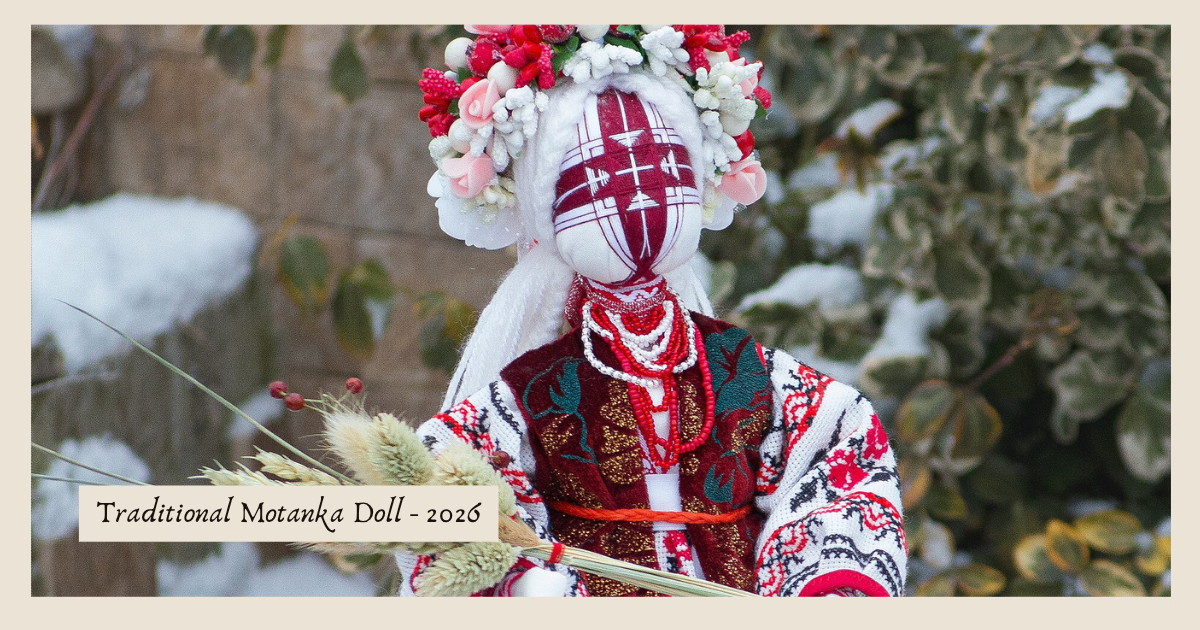
Embroidery has also carried protective meaning in many cultures. Everything from motifs, colors, to placements on clothing, were believed to guard the wearer. Especially around vulnerable openings like the neck, cuffs, and hem. In some traditions, the stitching itself functioned almost like a protective boundary worked directly into the garment.
Weaving offers another powerful magical metaphor because separate threads, through strategy and intention, become one larger pattern. A woven object can represent something being deliberately brought together, strengthened, or made whole.
In Greek mythology, the three Moirai—often called the Fates—became associated with the thread of human life: Clotho spins it, Lachesis measures or allots it, and Atropos cuts it. This thread is spun of the “formless cosmic void”, determining the length and pattern of a human existence from birth to death.
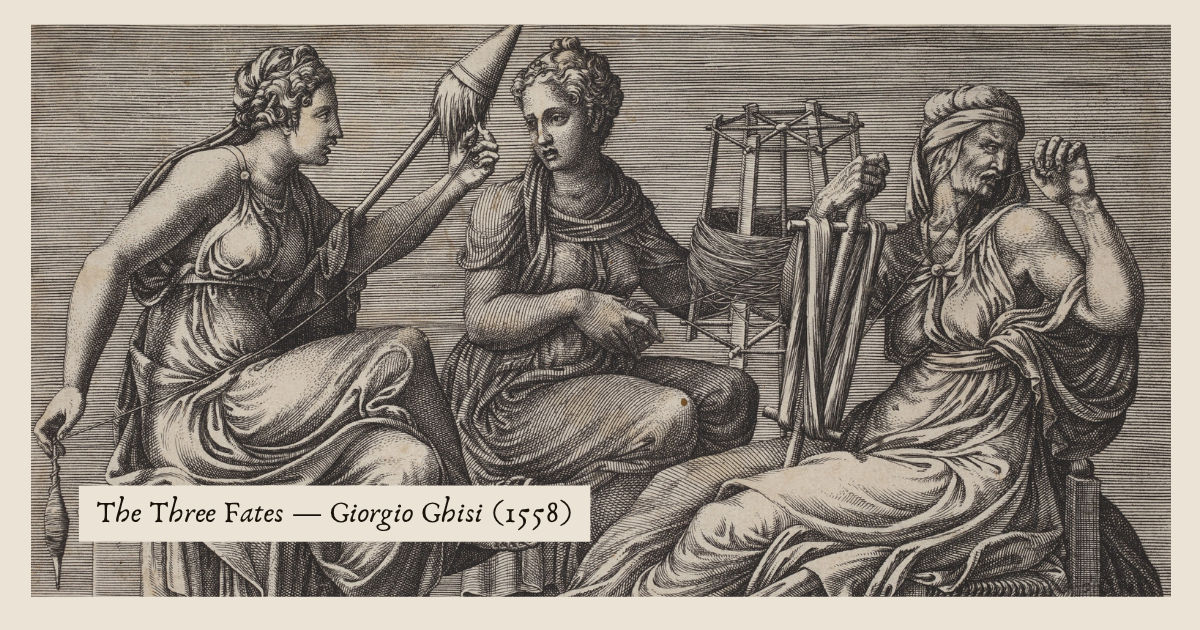
A human life literally becomes something that can be spun, measured, altered, and eventually (!) severed.
In the myth of Theseus and the Minotaur, Ariadne gives Theseus a thread so he can enter the Labyrinth, kill the Minotaur, and find his way back out again. Plutarch refers to Ariadne giving Theseus the “famous thread” and teaching him how to navigate the Labyrinth. What I love about Ariadne’s thread is that its power is in connection. Theseus survives because a line is tying him to the world outside.
In Diné cosmology, Na'ashjé'íí Asdzáá (Spider Woman) taught the people how to spin sheep’s wool, dye fibers, and weave. Her husband, Spider Man—(not the Marvel Spider Man, which clearly stole the name!)— built the first loom. The loom itself is a cosmic map. Today, the Diné (Navajo) instruct young weavers to find a spider web in the early morning dew, which glisten with sunlight, and place the web in their palm without destroying the web, which in turn will bless the gift of weaving into the young weaver’s spirit (source: Jann Lynn Joee).
Similarly, in the Hopi tradition, known as Kokyangwuti, Spider Grandmother is a co-creator of the universe who “spun the web of life”. She taught the Hopi how to spin and weave wild desert cotton. In Hopi textiles, the weaver does not invent a pattern; instead, the weave manifests a sacred geometry that already exists within Spider Grandmother's greater creation.
These feel like such a prime examples of why thread works when talked about symbolically: a thread can lead you somewhere, bind you to someone, mark where you’ve been, or give you a way home. It can act as a manifestation and representation of the universe itself.
Across all of these stories, fiber becomes much more than material. It becomes a way of making invisible things visible: fate, relationships, memory, promises, paths, even human lives. And once you start noticing that idea, it appears everywhere.
Recommended Reading
Ariadne by Jennifer Saint
Greek myths involving the Moirai, Theseus, Ariadne, and the Labyrinth
Circe by Madeline Miller
Women’s Work: The First 20,000 Years by Elizabeth Wayland Barber
With Her Own Hands by Nicole Nehrig
The Fabric of Civilization by Virginia Postrel
How to Weave a Navajo Rug and Other Lessons from Spider Woman by Lynda Teller Pete and Barbara Teller Ornelas
Spinning Something From Nothing
Spinning might be one of the most inherently magical stages of textile creation, and maybe not coincidentally, skill-demanding. When done successfully, loose, chaotic fiber becomes one continuous strand, requiring skill, repetition, and tension. I often wonder if it’s due to the difficulty of this step in fiber processing that often evokes a sense of, “it must be magic!” in seeing it produced.
The concept of spinning something from nothing was popularized in Rumpelstiltskin, where the miller’s daughter is ordered to do the impossible: spin straw into gold—or die. The magical transformation literally happens through textile work. And, it also comes with a supernatural bargain.
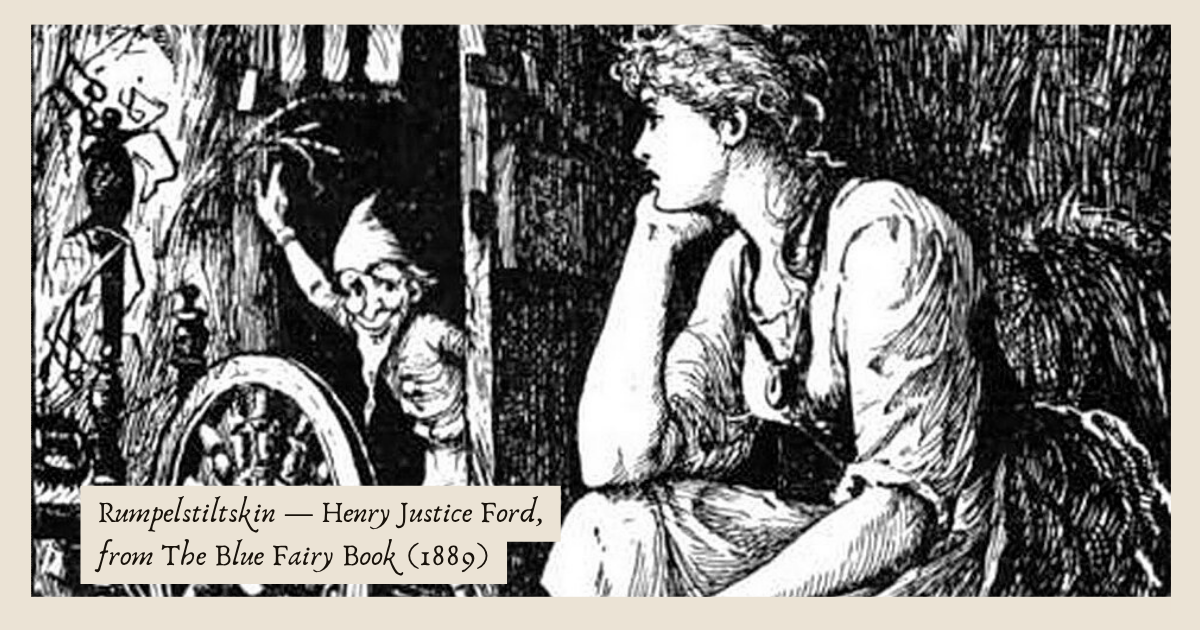
Then there is Sleeping Beauty, where the tools of spinning become the mechanism for a curse. One thing I found funny while researching: the classic image of Sleeping Beauty pricking her finger on a razor-sharp spindle is a little questionable, because traditional hand spindles are generally not sharp.
Earlier versions offer other potential explanations for this oversight, including a seventeenth-century story in which a splinter from flax ends up beneath the princess’s fingernail. Somewhere along the way, perhaps with translations or retellings, that key detail was lost. So yes, to confirm, rewritten fairy tales have apparently been spreading misinformation about spinning equipment for centuries. How many times have I watched Sleeping Beauty, and even after trying (and miserably failing) at spinning myself, never once questioned this.
Read more about the Sleeping Beauty spindle question here
Recommended Reading
Rumpelstiltskin in the Brothers Grimm collections
Sleeping Beauty / Little Briar Rose in the Brothers Grimm collections
Respect the Spindle by Abby Franquemont
When Fiber Gets Dangerous
Fairy tales aside, what really stood out to me in these stories was how often fiber work becomes tangled up with transformation, danger, bargains, and curses.
Fiber is not inherently gentle or forgiving. (I say this as someone whose drop spindle is currently serving time in a drawer for crimes against me.) Part of me wonders whether some of these stories were inspired by generations of people learning these crafts firsthand. The hard way. Anyone who has ever frogged three (or more) hours of knitting, dropped their stitches, snapped a thread, or watched a supposedly simple project descend into chaos can probably understand how fiber arts acquired a reputation for sorcery and curses.
I mean, we even have a term called the Boyfriend Sweater Curse: the superstition that knitting a sweater for your partner may somehow doom the relationship. Apparently, even modern knitters looked at hundreds of hours of labor, emotional investment, and yarn and thought: yes, this feels like the perfect setting for a curse.
In some Slavic tales, Baba Yaga also has her own place in fiber folklore: young women are sent to her hut and given impossible household tasks—including spinning—and survival depends on skill, cleverness, and sometimes, a little supernatural help.
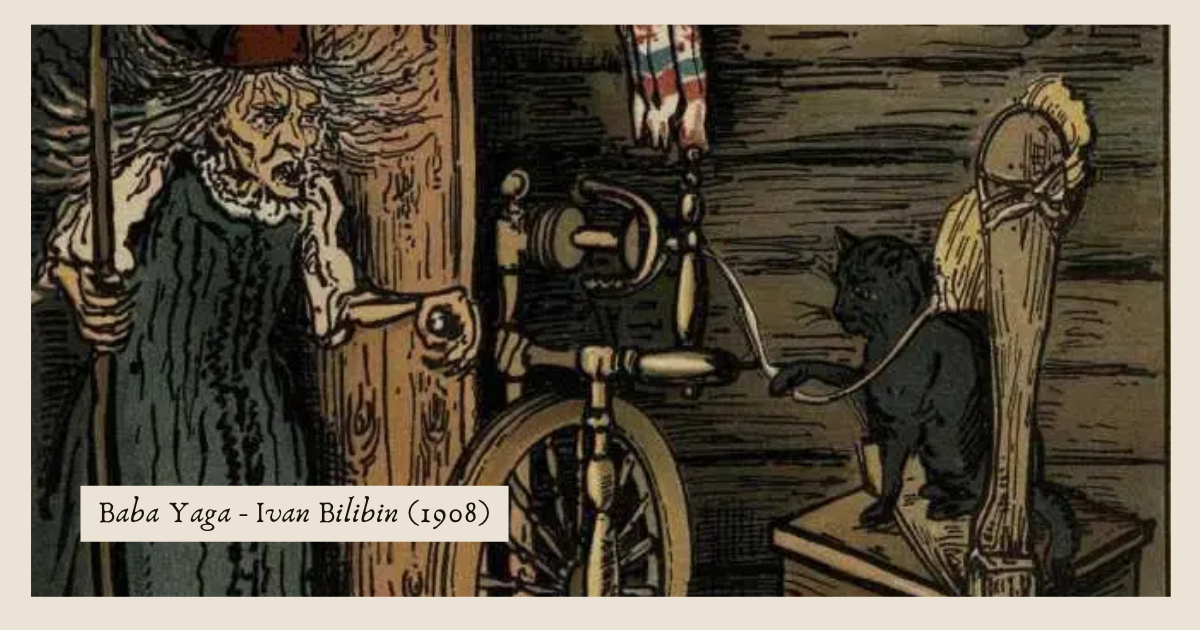
In Vasilisa the Beautiful, Baba Yaga is very explicit: if Vasilisa fails to complete the impossible household tasks, Baba Yaga will eat her. Spinning in stories often appears as a test: prove yourself capable, or face something much worse than tangled or uneven yarn.
Another popular example of cursed items is the witch’s ladder: a cord or length of wool worked with knots, sometimes incorporating feathers or other objects. In nineteenth-century folklore, each knot could be imagined as holding an illness, misfortune, or curse intended for another person. Where did this concept originate? The origin of the witch’s ladder traces back to an 1878 physical discovery in a sealed attic in Wellington, Somerset, England. Workmen found a 1.5-meter string or rope woven with feathers alongside six brooms and an old chair. The workmen then dubbed the object a "witches' ladder," claiming it was an instrument used by witches to climb over rooftops or steal milk from neighbors' cows.
In the opposite direction of cursed objects, there are also long traditions of textiles used to ward off harmful influence. In North Africa, including among Amazigh communities, woven and embroidered textiles could serve as forms of spiritual protection (as shown below):
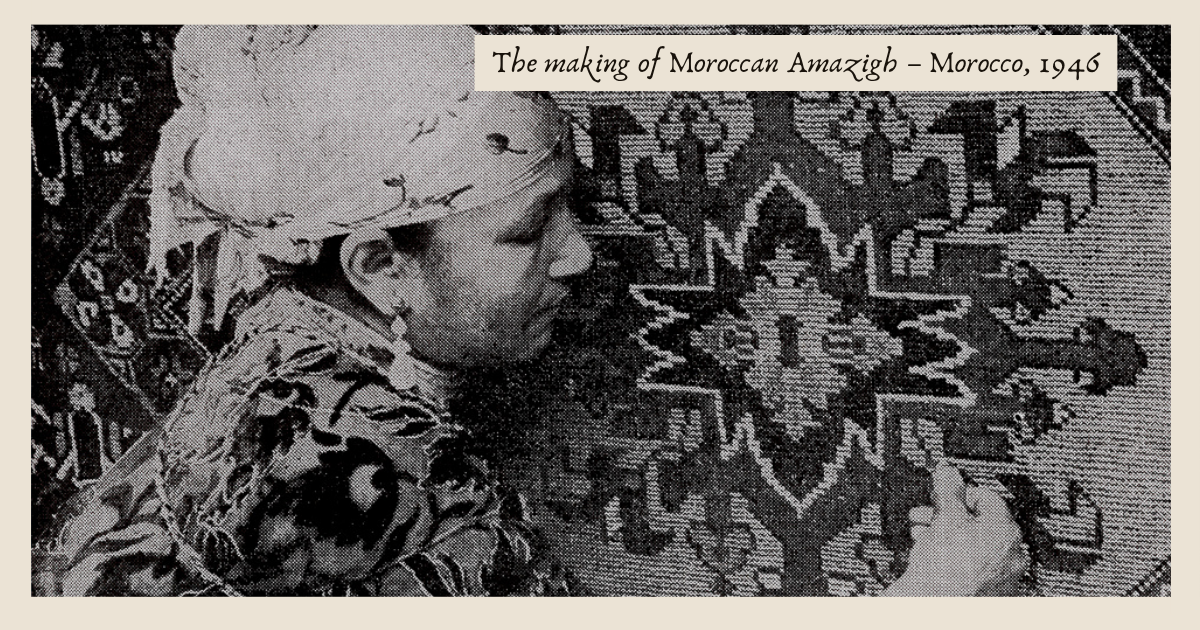
Geometric motifs, colors, and other decorative elements were sometimes intended to protect the wearer or household from forces such as the evil eye.
Recommended Reading
The Once and Future Witches by Alix E. Harrow
Spin Span Spun: Fact and Folklore for Spinners and Weavers by Bette Hochberg
Women's Work: The First 20,000 Years by Elizabeth Wayland Barber
Vasilisa the Beautiful / Vasilisa the Fair — the traditional Russian folktale
Baba Yaga: The Wild Witch of the East in Russian Fairy Tales by Sibelan Forrester, Helena Goscilo, and Martin Skoro
North African Textiles by Christopher Spring & Julie Hudson
Why Fiber Makes Such a Good Magic System
The more I researched all of this, the more obvious it became why fiber works so naturally as magic—and why it appears so often across folklore.
Fiber arts already contain many of the same ingredients fantasy magic systems rely on: symbols, materials, gestures, repetition, rules, and intention. Experience. Every stage has its own built-in logic. Patterns are almost like spells: sequences of instructions that, when followed correctly, create something that didn’t exist before. Skill equates to power.
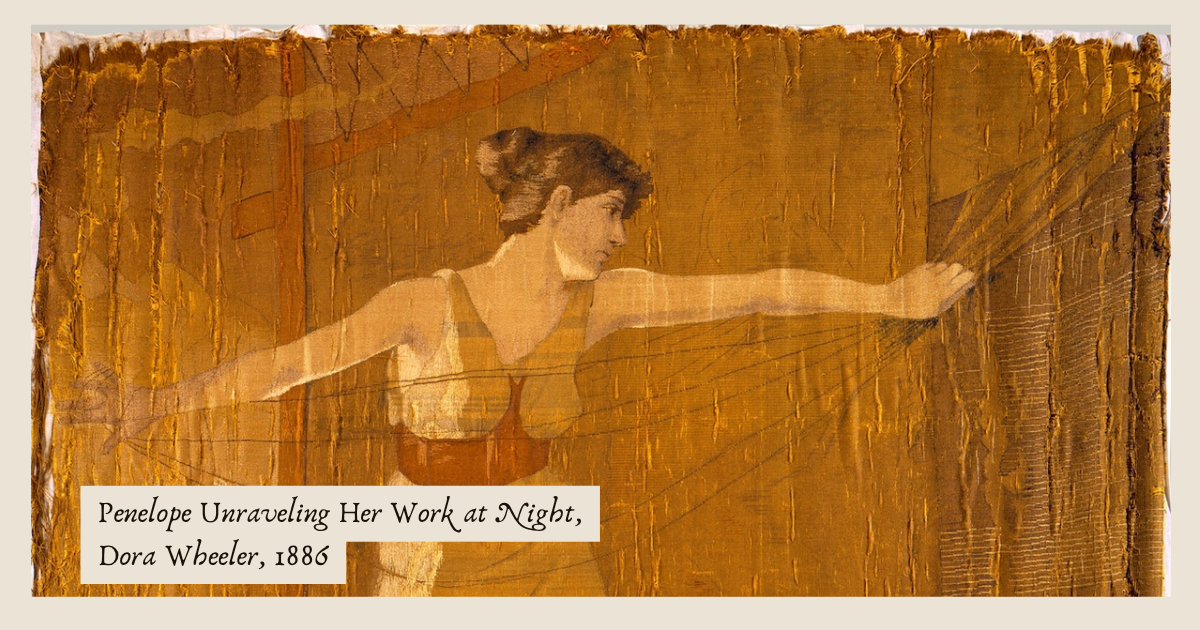
And unlike magic that simply appears because someone discovers they were born powerful—a trope I’ve never particularly loved—fiber arts require practice. Tension matters. Materials matter. Even mistakes matter! Skill is developed slowly, often through a truly unreasonable amount of trial and error. It’s part of the journey, and as I’ve learned the hard way, there are no good shortcuts in knitting. Or sewing. Or really anything that matters, really.
All of this folklore + mythology helped inspire the magic system in RAVEL, my upcoming adult fantasy novel, where knitting, spinning, dyeing, and making are more than crafts—they're forms of spellwork. Magic is something you make with your hands, stitch by stitch, with every knot, color, and fiber carrying intention—borrowed from some of the concepts and ideas I’ve discussed in this article. And, like knitting itself, mastering magic takes a lot of patience, practice, and a willingness to unravel your mistakes, should they arise.
This article only scratches the surface, and I’ll always consider myself a student of these subjects. So I’d love to hear what I missed:
Have you ever encountered a superstition, folktale, family tradition, or story involving thread, knots, sewing, spinning, weaving, crochet, or knitting?
